Source Flame Retardant 35kv Power Cable for Construction, Power Station, Underground
Find 30 verified listings for Flame Retardant 35kv Power Cable suitable for construction, power stations, and underground installations. Compare specifications including voltage ratings, insulation materials, and certifications from multiple manufacturers.
Key considerations
Products List


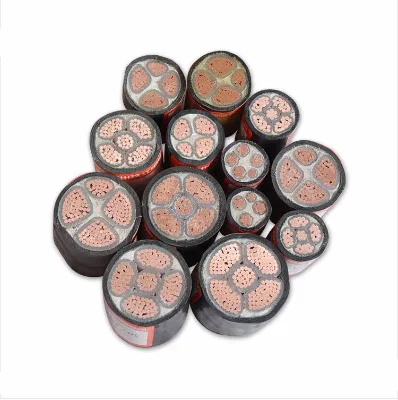
Power Cable High Temperature Resistant Fireproof Flexible Cable Copper Wire
$0.50 - $15.00
MOQ: 1000 Meters


Industrial Grade XLPE Power Cable 34+22.5mm² Yjv 0.6/1kv Flame Retardant
$0.27 - $88.00
MOQ: 100 Meters


Comprehensive Sourcing Guide
Flame Retardant 35kv Power Cable Sourcing Guide
Procuring flame retardant 35kV power cables requires a rigorous approach to ensure that the selected products meet the demanding safety and performance standards of high-voltage infrastructure. These cables are critical components in power transmission and distribution networks, where failure can lead to catastrophic system outages or safety hazards. Buyers must prioritize vendors who can demonstrate consistent manufacturing quality and adherence to specific voltage ratings, as the 35kV class represents a significant threshold in medium-to-high voltage applications. The selection process involves balancing technical specifications with commercial viability, ensuring that the cable's insulation and sheathing materials provide the necessary protection against fire propagation and electrical stress.
The sourcing strategy must account for the diverse operational environments where these cables are deployed, ranging from underground installations to industrial power stations. Flame retardancy is not merely a feature but a fundamental safety requirement, particularly in confined spaces or areas with high fire loads. Buyers should verify that the insulation materials, such as XLPE, and sheath materials, like PVC, are specifically engineered to resist ignition and limit flame spread. This guide outlines the essential verification steps, technical parameters, and commercial terms necessary to secure a reliable supply chain for high-voltage cable projects, ensuring that every procurement decision is backed by verified data and industry best practices.
Product Scope and Observed Listing Signals
The market for 35kV power cables presents a wide range of product configurations, with observed listings indicating a voltage rating that spans from low to high voltage, specifically covering the 3.6-35kV range. Buyers will encounter various conductor materials, including red copper wire and aluminum options, which directly influence the cable's conductivity and weight. The physical form is consistently observed as round wire, often stranded to enhance flexibility and mechanical strength during installation. It is crucial to distinguish between different model designations, such as YJV, YJLV, and specialized variants like N2XSH or WDZ-YJY, as each implies a specific combination of conductor material, insulation type, and armor configuration suitable for different installation conditions.
Listing signals also reveal significant variation in packaging and customization capabilities, which are vital for logistics and project-specific requirements. Products are frequently offered with customization options, allowing buyers to specify lengths, conductor sizes, and armor types like steel wire to match the mechanical stresses of the intended route. Packaging methods vary from wooden drums and iron trays to steel wooden drums, reflecting the need to protect the cable during long-distance transport. While some listings mention specific standard sizes like 50-630mm², others indicate that standards can be tailored to customer requests, necessitating a clear definition of the required cross-sectional area and length during the initial inquiry phase to avoid mismatches between the ordered product and the project specifications.
Technical Specifications to Verify
Verifying the technical specifications of 35kV cables is paramount to ensuring operational reliability and safety under load. The rated voltage is a critical parameter, with observed data confirming a range of 3.6-35kV, which must align precisely with the system's design voltage. Buyers must confirm the conductor material, as the choice between copper and aluminum affects the cable's current-carrying capacity and resistance. The insulation material is typically XLPE, which offers excellent thermal and electrical properties, while the sheath material is often PVC, providing mechanical protection and environmental resistance. It is essential to verify that the cable is designed for both AC and DC currents if the application involves specific power conversion systems, as some listings indicate dual capability while others specify AC only.
Operational limits and mechanical properties are equally critical and must be validated against the specific environmental conditions of the installation site. The operating temperature is frequently cited as a maximum of 90°C, which defines the thermal ceiling for continuous operation, while the ambient temperature range must be checked to ensure the cable can withstand local climate extremes, with some specifications noting limits as low as -15°C. Installation constraints, such as the minimum laying temperature of 0°C and the bending radius requirements (ranging from 15D to 20D), must be strictly observed to prevent damage to the insulation and conductor during the pulling process. Additionally, the presence of armor, such as steel wire, provides necessary mechanical protection for underground or direct burial applications, and its inclusion should be confirmed based on the risk of rodent damage or external mechanical stress.
Compliance and Safety Documentation
Compliance with international and local safety standards is non-negotiable when sourcing high-voltage power cables, as these documents serve as the primary evidence of product safety and quality. Buyers should expect to see certifications such as CCC, CE, ISO, VDE, and RoHS, which indicate that the manufacturer adheres to rigorous testing protocols for electrical safety, environmental impact, and material quality. The presence of these certifications suggests that the cable has undergone specific tests for fire resistance, electrical breakdown, and mechanical durability. It is important to note that while some listings mention specific standards like EN 50200, buyers must verify the exact standard applicable to their region, as regulatory requirements can vary significantly between markets.
Safety documentation must also include detailed test reports that validate the flame retardant properties of the cable, ensuring it meets the necessary fire safety classifications for the intended application. The flame retardant characteristic is particularly important for cables used in construction, power stations, and underground tunnels, where fire propagation can be catastrophic. Buyers should request evidence that the cable sheath and insulation materials have been tested for self-extinguishing properties and low smoke emission. Furthermore, the documentation should confirm that the cable is suitable for the specific application environment, whether it be industrial, telecommunication, or power station use, as different environments may impose unique safety requirements that go beyond general certification.
Cost Drivers and Commercial Terms
The cost of 35kV power cables is driven by several key factors, including the price of raw materials like copper and aluminum, the complexity of the insulation and armor design, and the specific customization requirements of the order. The observed price range in the market is broad, spanning from $0.01 to $999, which reflects the variability in cable length, cross-sectional area, and material composition. Buyers must understand that the unit price is often dependent on the total order volume, with minimum order quantities (MOQ) ranging from 500 meters to 5000 meters depending on the supplier and product model. This variability necessitates a clear understanding of the project's total cable requirement to negotiate effectively and avoid unnecessary costs associated with small batch orders.
Commercial terms and payment structures play a significant role in the overall procurement strategy and financial planning. Standard payment terms often involve a split structure, such as 30% deposit and 70% upon completion or shipment, which helps mitigate risk for both parties. The price terms, including EXW, FOB, and CIF, determine the point at which responsibility and cost transfer from the seller to the buyer, influencing logistics planning and insurance requirements. Buyers should carefully evaluate these terms in the context of their supply chain capabilities, as choosing a CIF term might simplify logistics but could result in higher overall costs compared to an EXW arrangement where the buyer manages transportation. Additionally, the availability of free samples can be a valuable tool for initial quality assessment, though it should not replace the need for comprehensive testing of the full production batch.
Supplier Qualification and Quality Control
Selecting a qualified supplier is a critical step in the procurement process, as the manufacturer's capability directly impacts the reliability and longevity of the power cable infrastructure. Buyers should verify the supplier's factory background, with some listings identifying established entities like Guowang Cable Group, which suggests a level of industrial capacity and experience. It is essential to assess the supplier's track record in producing cables that meet the specific voltage and material requirements of the project, ensuring they have the necessary production lines and quality control systems in place. The ability to offer customization, such as specific model numbers like YJV32 or YJLV32, indicates a flexible manufacturing process capable of adapting to unique project needs.
Quality control measures must be robust and transparent, with suppliers expected to provide evidence of their internal testing procedures and adherence to international standards. Buyers should inquire about the supplier's process for ensuring consistency in insulation thickness, conductor resistance, and mechanical strength, as these factors are critical for the cable's performance under high voltage. The presence of certifications like ISO and VDE suggests a commitment to quality management systems, but buyers should also request specific test reports for the batch being supplied. Additionally, the supplier's ability to handle packaging requirements, such as wooden drums or steel wooden drums, ensures that the cable arrives at the site in optimal condition, ready for installation without damage from transit.
Long-Term Procurement Checks
Establishing a long-term procurement relationship requires ongoing verification of the supplier's performance and the cable's field performance over time. Buyers should implement a system for monitoring the cable's operational history, including any instances of failure, maintenance requirements, or changes in performance characteristics. This data is crucial for validating the initial selection and ensuring that the cable continues to meet the safety and reliability standards required for the application. Regular audits of the supplier's production processes and quality control records can help identify potential issues before they impact the supply chain, ensuring a consistent flow of high-quality products.
Future procurement decisions should be informed by a comprehensive review of the supplier's ability to adapt to changing market conditions and regulatory requirements. As standards evolve and new safety regulations are introduced, the supplier must demonstrate the agility to update their product lines and certifications accordingly. Buyers should also consider the supplier's capacity to scale production in response to project expansions or emergency replacements, ensuring that lead times and MOQs remain manageable. By maintaining a proactive approach to supplier management and performance monitoring, buyers can secure a reliable supply of flame retardant 35kV power cables that support the long-term stability and safety of their power infrastructure.
FAQs
What insulation materials are used in 35kv power cables?
XLPE is the primary insulation material for these cables, offering excellent dielectric strength and thermal stability. The sheath is typically made of PVC for mechanical protection. Some variants use NA2XSY construction with specific sheathing for enhanced durability in harsh environments.
Can these cables be customized for specific projects?
Yes, customization is available to meet unique project requirements. Manufacturers can adjust specifications such as conductor size, armor type, and length. The standard range covers 50-630mm2, but custom requests are accepted to ensure the cable fits the exact engineering needs of the installation.
Which certifications are required for 35kv power cables?
Common certifications include CCC, CE, ISO, VDE, and RoHS. These ensure compliance with international safety and environmental standards. Buyers should verify specific certification requirements based on their local regulations and project specifications to ensure the supplied cables meet all necessary quality and safety benchmarks.
What are the operating temperature limits for these cables?
The maximum operating temperature is typically 90°C for XLPE insulated cables. The ambient temperature should not be lower than -10°C or -15°C depending on the specific model. The laying temperature must not be lower than 0°C to prevent damage during installation and ensure long-term reliability.
How is the pricing and payment structured for bulk orders?
Payment terms are often structured as 30% deposit and 70% balance before shipment. Price terms include EXW, FOB, and CIF options. The observed price range is broad, so buyers should request specific quotes based on their required specifications, quantity, and delivery location to get accurate pricing.
What packaging methods are used for shipping these cables?
Cables are typically packed on wooden drums or steel wooden drums for protection. Some variants may use iron tray packing. Custom packaging requirements can also be accommodated to ensure safe transport and handling, preventing damage to the cable sheath and insulation during transit to the destination site.